

The phosphogypsum filling technology utilizes phosphogypsum as the primary raw material. By incorporating cementitious materials or other admixtures (such as quicklime, steel slag, etc.), and adding water for stirring to form a homogeneous mixed slurry, it is backfilled into the goafs of underground mines. After solidification and hardening, the slurry supports the roof of the underground goafs, preventing surface subsidence and enabling the safe and efficient recovery of resources.
In March 2024, Guizhou Phosphorization Group Green Environmental Protection Industry Co., Ltd., in collaboration with Central South University, developed an anhydrite-based cementitious agent slurry. This slurry can effectively stabilize voids within mines, prevent the occurrence of geological disasters like surface collapse, and has the capacity to consume over 100,000 tons of phosphogypsum annually.

02 Application of Phosphogypsum in Soil Improvement
Phosphogypsum generated by the wet-process phosphoric acid process contains heavy metals such as Cd, Cr, and Pb, radioactive pollutants, and also suffers from excessive fluorine content, posing pollution risks to agricultural soil. Therefore, harmless treatment is essential before its utilization. Once treated harmlessly, phosphogypsum is rich in elements like calcium and phosphorus, which can promote plant growth, development, and fruit ripening.
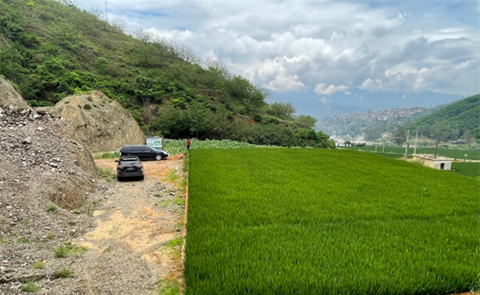
Yunnan Agricultural University and Kunming Chuanjinnuo Chemical Co., Ltd. conducted a pilot demonstration of phosphogypsum modification for land reclamation in Lvmao Village, Tongdu Town, Dongchuan District, Kunming City. Data from the two-year pilot test revealed that through the soil utilization of modified phosphogypsum, stony desertified land was successfully transformed into high-quality arable land. Moreover, the soil fertility indicators of the test fields significantly improved. The total phosphorus and fluoride levels in the surface runoff of the demonstration fields showed no significant differences compared with those of surrounding ordinary arable land, and the quality of seepage water met the Class III standards specified in the *National Groundwater Quality Standard* (GB/T 14848).
03 Backfilling of Phosphogypsum for Ecological Restoration
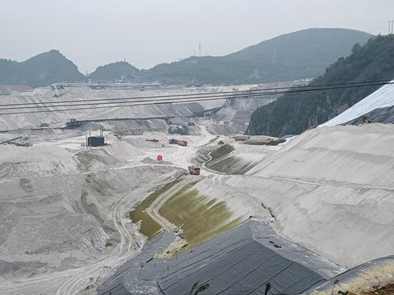
In September 2024, the ecological restoration pilot project of Hubei Dayukou Company, a subsidiary of CNOOC Chemical Co., Ltd., commenced at the construction site of the Chupishan Phosphogypsum Dry Stacking Warehouse Project. This event marked the official launch of China's first project to undertake mine ecological restoration and research using the dihydrate phosphogypsum cemented backfilling process.
This project employs harmlessly treated phosphogypsum, supplemented with cementitious materials, to conduct cemented filling in the ecological restoration area downstream of the initial dam of the Chupishan Phosphogypsum Dry Stacking Warehouse Project in Dayukou. As the first project in China to adopt the dihydrate phosphogypsum cemented backfilling process for mine ecological restoration and research, as well as one of the pilot projects in Jingmen City for applying phosphogypsum in mine ecological restoration, it is expected to recycle approximately 2 million tons of phosphogypsum.
04 Preparation of Road-building Materials from Phosphogypsum
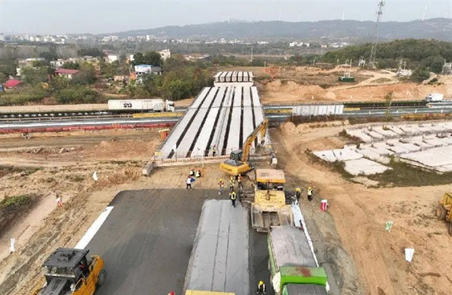
In road engineering, phosphogypsum is primarily applied to the base course and subgrade. It contains fine particles required for base course materials and calcium sulfate dihydrate necessary for the hydration and hardening of cementitious materials, thus fulfilling the functions of aggregate filling and cementitious solidification. Using phosphogypsum in road construction not only enables the large-scale consumption of phosphogypsum but also reduces the amount of cement used, significantly lowering road construction costs and yielding remarkable social and economic benefits.
In November 2024, with the support of Hubei Communications Investment Group, Hubei Provincial Transportation Planning and Design Institute, and other entities, Huangmailing Holding Group collaborated with Hubei Liantou Road & Bridge Co., Ltd. Phosphogypsum was crushed, metered, mixed with cement and curing agents, and stirred again, then used as a road base material to replace traditional water-stable crushed stone in the first contract section of the Hubei section expansion project of the Beijing-Hong Kong-Macao Expressway. This represents the first application of phosphogypsum in the paving of high-grade highways in Hubei Province, with the potential to consume thousands of tons of phosphogypsum per kilometer.
05 Preparation of Gypsum-based Building Materials from Phosphogypsum
The utilization of phosphogypsum to produce building material products is one of the most prevalent approaches to phosphogypsum application. The *Action Plan for the Comprehensive Utilization of Phosphogypsum* explicitly advocates promoting the production of products such as cement retarders, gypsum mortars (including plastering gypsum, self-leveling gypsum, etc.), gypsum panels, Type II anhydrite and its products, high-precision gypsum blocks, building decoration materials, and prefabricated composite building materials using phosphogypsum as the raw material.
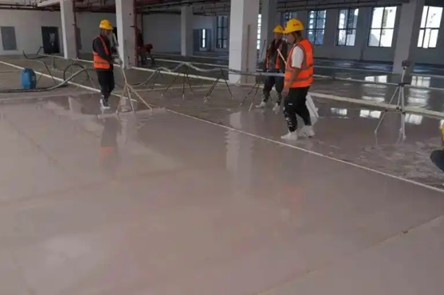
In May 2023, Guizhou Phosphorization Green Environmental Protection Industry Co., Ltd. established the world's first production line for Type II anhydrite with an annual output of 300,000 tons. In November 2024, in the supporting infrastructure and commercial housing project of the Green Manufacturing Industrial Park in Nanming District, 4 out of 8 proposed buildings were constructed using anhydrite self-leveling mortar produced by Guizhou Phosphorization Group. The application area amounted to approximately 100,000 square meters, with an estimated consumption of 8,000 tons. This milestone signifies significant progress in the large-scale engineering application of anhydrite self-leveling mortar by Guizhou Phosphorization Group. This product is mainly used for indoor floor leveling. After hydration, it exhibits excellent strength stability, water resistance, and enhanced crack resistance. Its flatness and construction efficiency outperform those of traditional cement-based self-leveling materials, and it is free from issues such as cracking and bulging caused by shrinkage.
06 Preparation of Cement Retarders from Phosphogypsum
Phosphogypsum contains impurities like phosphorus and fluorine, which can significantly extend the setting time of cement. After undergoing purification, impurity removal, and modification, phosphogypsum can be utilized as a cement retarder. Common pretreatment methods include water washing, quicklime neutralization, and calcination.
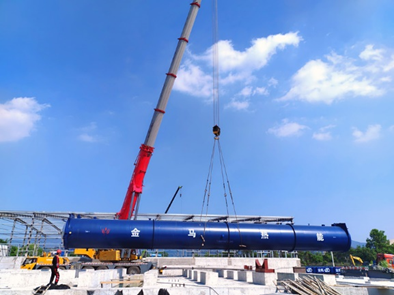
In May 2024, at the site of the 600,000-ton-per-year phosphogypsum comprehensive utilization technical transformation project of Lvyang Building Materials Company, a subsidiary of Tongling Liuguo Chemical Co., Ltd., three autoclave units were being installed, while the construction of the high-quality cement retarder finished product workshop was also underway. The first-phase project is expected to be completed and put into operation in June of the same year. Upon completion of both phases, the project will achieve an annual production capacity of 300,000 tons of high-quality cement retarder and 30,000 tons of gypsum mortar, enabling the annual utilization of 600,000 tons of phosphogypsum by-products from Liuguo Chemical Co., Ltd., and delivering notable environmental and economic benefits.
07 Simultaneous Production of Sulfuric Acid and Cement from Phosphogypsum
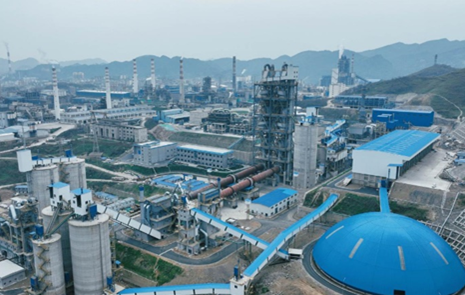
In the raw material processing stage, phosphogypsum undergoes pressure filtration and drying to be transformed into hemihydrate gypsum. Subsequently, hemihydrate gypsum is blended with ingredients such as silica, bauxite, and coke, and then decomposed and calcined in a rotary kiln to produce cement clinker. The sulfur dioxide gas generated during the decomposition and calcination of gypsum is channeled to the sulfuric acid production line as a raw material.
In March 2024, the world's largest facility for the decomposition of phosphogypsum to simultaneously produce sulfuric acid and cement, invested and constructed by Guizhou Phosphorization Group, successfully completed its initial feeding and commissioning. Covering an area of approximately 200,000 square meters, this facility has an annual capacity to consume 1.4 million tons of phosphogypsum, produce 600,000 tons of sulfuric acid, and 800,000 tons of cement, ranking first globally in terms of scale. Leveraging phosphogypsum as the raw material, the facility can produce sulfuric acid with a concentration of 98% and cement, both of which meet the required standards. The sulfuric acid can be recycled to the upstream process for phosphoric acid production, while the cement can be sold externally or applied in mine filling.
Source: National Solid Waste Technology Information Sharing Platform
Editor: Ma Xiaoru
Reviewer: Wang Meihong
Supervisor: Jiang Shanjun